Bushido: The Samurai Code That Inspired Theodore Roosevelt
Posted on March 27, 2026
Article written by Yoshiaki Maekawa
Bushido and Religion
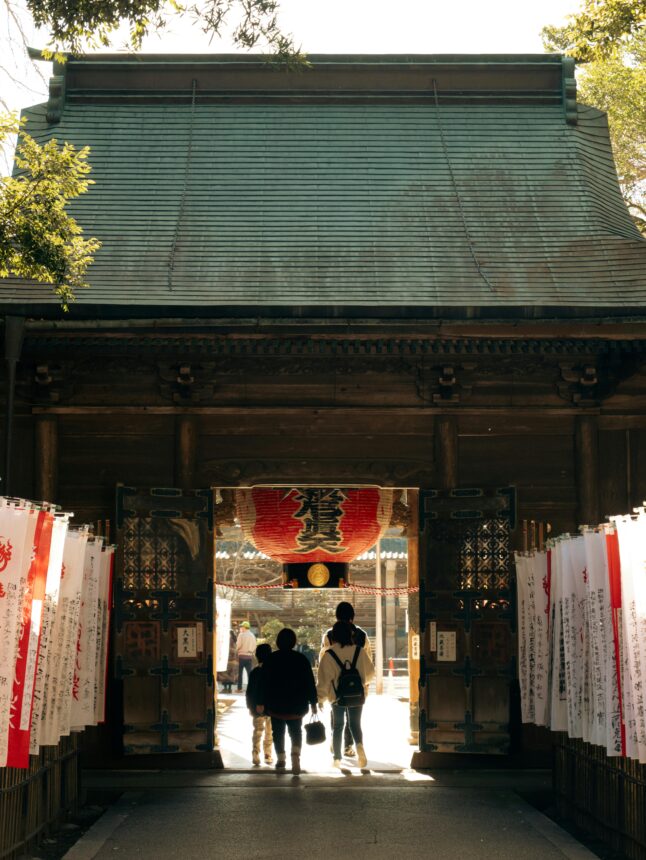
It is often said that, among the countries of the world, Japan has an unusually large number of people who consider themselves non-religious. However, once you come to Japan, you quickly realize that Shinto shrines and Buddhist temples can be found everywhere. In Tokyo alone, there are 2,887 temples and 1,438 shrines. Nationwide, the total number of temples and shrines reaches 157,167. By comparison, there are 56,749 convenience stores throughout Japan. In other words, the number of temples and shrines is approximately 2.8 times greater than that of convenience stores.
Japanese people visit shrines for their first shrine visit of the New Year (hatsumōde). When a child is born, families visit a shrine for hatsumiya-mairi; later, they return for Shichi-Go-San and, after reaching adulthood, for visits associated with unlucky years (yakudoshi). For funerals and grave visits, people go to Buddhist temples, where monks chant sutras to honor and console the spirits of their ancestors. This distinctive religious outlook was cultivated over a history spanning some 2,000 years. The samurai, who began to rise to prominence about 1,000 years ago, were also shaped and refined over roughly 700 years-from their emergence through the end of the Edo period-together with Japan’s unique religious sensibilities.
Bushido Is Not Only for Samurai
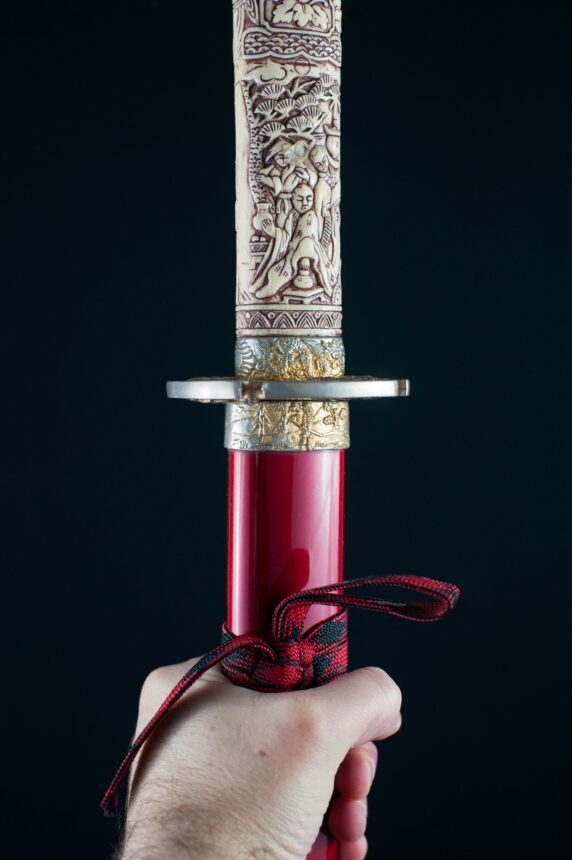
It was Ashikaga Yoshimitsu, the third shogun of the Muromachi period, who used Noh theater as a means of spreading the spirit of Bushido throughout Japan. Many Noh plays convey a distinctive view of life and death rooted in samurai values. Bushido is based on a uniquely Japanese moral code formed through the融合 (fusion) of Shinto, Buddhism, and Confucianism. Samurai embodied this moral code and way of life themselves, serving as role models for ordinary people. In this sense, Bushido can be said to have been passed down to the present day as a spiritual foundation for the Japanese people.
Furthermore, the role of conveying this moral code in a way that was easy for anyone to understand was fulfilled by Kabuki, which flourished during the Edo period. That tradition continues to this day.
Bushido, Read Around the World
Explaining Japanese Bushido in a single phrase to foreigners is extremely difficult. Inazo Nitobe, the author, experienced this difficulty firsthand when trying to explain Bushido in words to people overseas. As a result, he decided to publish Bushido in English in 1900.
At the time, the President of the United States was Theodore Roosevelt, the 36th president. In March 1904 (Meiji 37), when the Russo-Japanese War broke out, former Minister of Justice Kaneko Kentarō and Minister to the United States Takahira Kogorō were dispatched to America to seek assistance with peace negotiations. When they were invited to a luncheon hosted by the President, Bushido became a topic of conversation. Subsequently, Minister Takahira presented a copy of the book to President Roosevelt.
After reading it, the President was deeply impressed and went on to purchase as many as 60 copies himself, distributing them to his family, friends, and subordinates. It is said that he told his five children, “The noble philosophy of Japanese Bushido is something we Americans can also learn from. However, when you come to the passage about ‘loyalty to one’s lord,’ you should read it instead as ‘loyalty to the American flag,’” and encouraged them to read the book.
Given this episode, it seems unlikely that it was mere coincidence that President Roosevelt later volunteered to act as a mediator for the peace treaty ending the Russo-Japanese War.
Japanese Bushido has had a profound influence on great figures around the world. Learning about its spirit may well serve as a key to unlocking a deeper understanding of Japan’s rich and profound culture.
START YOUR JOURNEY TODAY
Ready to buy property in Japan? Let Mr. LAND guide you toward making your dream a reality. Browse our listings, book a consultation, or contact our friendly team for more information.
Don’t wait—take the first step toward owning your dream property in Japan today!
Ready to buy property in Japan? Let Mr. LAND guide you toward making your dream a reality. Browse our listings, book a consultation, or contact our friendly team for more information.
Don’t wait—take the first step toward owning your dream property in Japan today!