Spring Forecast in Japan: Mostly Sunny, Expect Fresh Starts
Posted on February 9, 2026
Along with the usual weather maps, heat index maps, and typhoon tracking maps, Japan has one particular map that won’t make viewers clench their teeth in anxiety or dread. Towards the middle of January, when the weather is at its coldest and clothing layers are at its thickest, the Japan Meteorological Corporation (JMC) releases everyone’s well-anticipated cherry blossom forecasts, a much appreciated reminder that warmer spring is just around the corner.
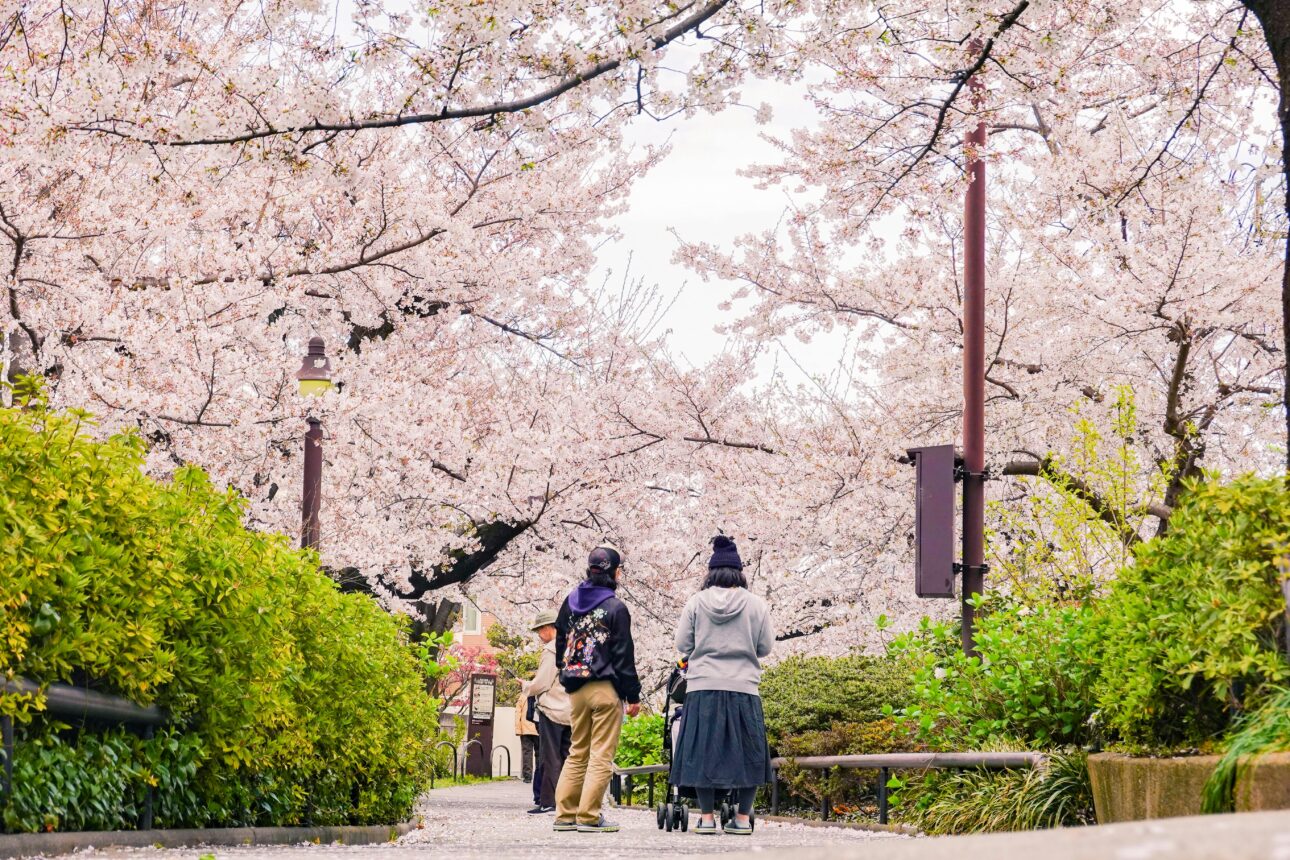
These forecasts track expected kaika (first flowering) and mankai (full bloom) dates across the nation and are updated regularly by JMC. Used widely amongst both locals and tourists, it has become a well-ingrained habit for many to scan these forecasts and plan ahead for hanami (flower watching) activities. Sakura navi, a mobile app dedicated to these cherry blossom forecasts, has even ranked number one among tourism apps across several countries, highlighting just how high cherry blossom viewing sits on peoples’ travel bucket lists.
Yet while the idea of an entire nation tracking flower blooms and coming together to admire the petals is sweet in itself, these forecasts do more than point out botanical changes or ideal viewing spots.
They carry a quieter significance, marking the passage of time and signaling the approach of new beginnings.
Why April Marks a Turning Point
That sense of anticipation created by cherry blossoms is reinforced by the way time itself is structured in Japan.
While much of the world treats January as the universal reset button, Japan’s rhythm of renewal is tied into the natural world– felt through the warming of the weather, and seen through the vibrancy of new blooms and fresh buds. The alignment of fragile cherry blossoms with the start of the fiscal year may seem deliberate, almost poetic. But this pairing came to exist through historical circumstance rather than intention.
During the Meiji period, in around 1886, the Japanese government formally established April as the beginning of the national fiscal year. While the exact reasoning remains uncertain, it is often said to have been influenced in part by the fiscal calendar of the economically powerful United Kingdom. Another commonly cited explanation is that the timing better accommodated rice farmers, who found it easier to pay taxes after the autumn harvest, once they had spent the winter assessing their finances.
While individual income tax is calculated on a calendar-year basis, running from January 1 to December 31, corporate taxation and government accounting follow the fiscal year that begins in April. Over time, this system influenced other parts of society. Public schools adopted the same schedule, and by the early 1900s, April had become the standard start of the academic year across all educational institutions in Japan.
What began as an administrative decision gradually shaped the tempo of everyday life, aligning national systems with the season already associated with renewal.
A Nation Springing into Motion
Because institutions move together, people do too.
April marks the beginning of a new academic year. Students advance grades, step into new classrooms, and meet unfamiliar classmates, while carrying forward the skills, knowledge, and friendships built in years past. At the same time, companies across the country welcome new employees, many of them fresh graduates entering professional life just weeks after graduation ceremonies in March.
For some, April brings relocation– moving away from home for university or work, signing the lease on a first apartment, or learning the rhythms of a new commute. Streets fill with new suits still stiff from their packaging. Shoes freshly polished, a reflexive checking of phones. There is a slightly different buzz in the air, in train stations crowded with people navigating unfamiliar routes and routines.
What makes this season distinctive is not just the scale of change, but its shared timing. Across Japan, millions of people experience transition simultaneously. The effect is collective, a quiet sense that everyone is starting something at once, even if those beginnings look different from one person to the next.
April becomes a nationwide pause between chapters, a moment suspended between what has ended and what has not yet fully begun.
When Endings Are Built Into Beginnings
Underlying this convergence of nature, systems, and personal change is a distinctly Japanese way of understanding it: mono no aware.
Often translated as an “awareness of impermanence,” mono no aware describes the gentle emotion that arises when we recognize that moments are fleeting. It is not dramatic sadness, but something softer, an appreciation tinged with the knowledge that nothing lasts forever. It suggests that every beginning already contains an ending.
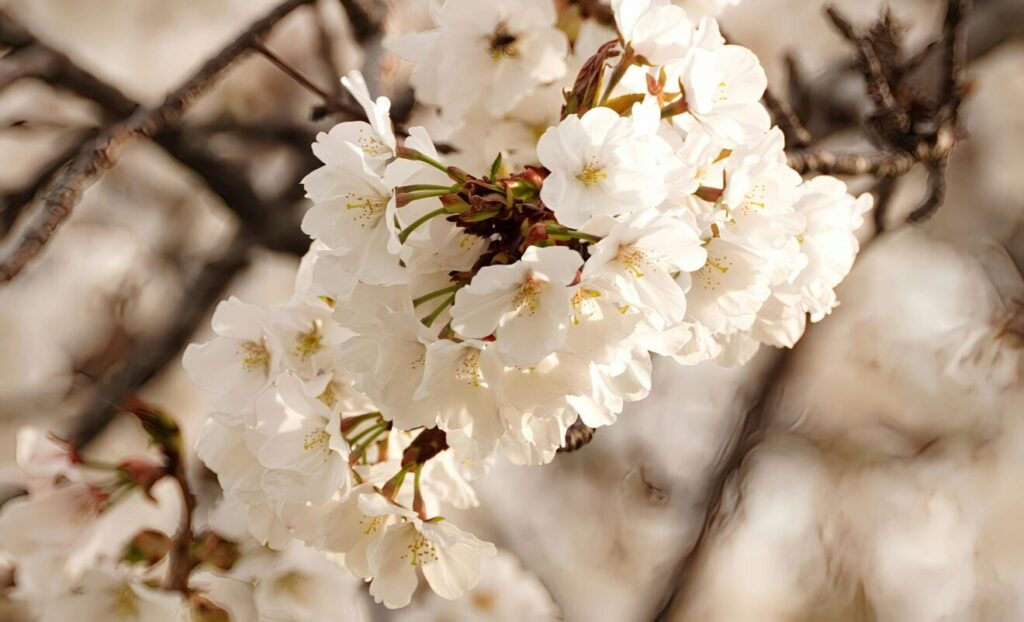
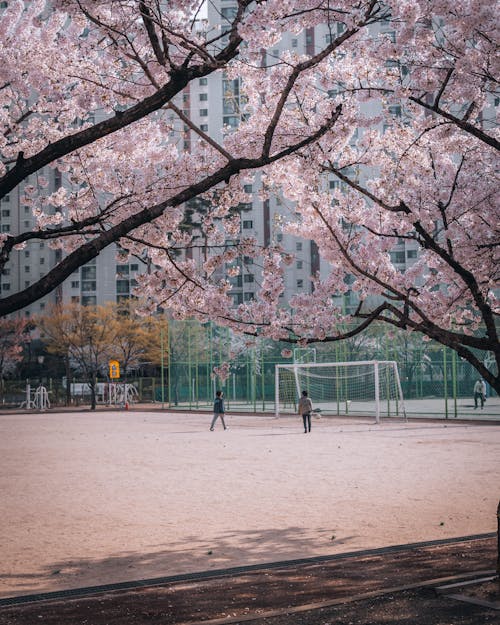
Cherry blossoms embody this idea perfectly. Their beauty is inseparable from their brevity. People gather beneath the trees each spring knowing the petals will fall within days. This knowledge does not diminish the experience, but rather deepens it. The blossoms are admired not in spite of their short life, but because of it.
April carries the same emotional complexity. While it is often framed as a season of fresh starts, it also brings quiet anxiety– the weight of new expectations, unfamiliar environments, and unspoken goodbyes. Old routines dissolve as new ones take shape. Friendships stretch across distance. Certainty gives way to possibility. There is a bittersweetness to it all, standing on the precipice of the before and after. Such liminal spaces are transient, serving only as a space of fleeting reprieve and reflection before we take the plunge.
April in Japan is not about clinging to change or celebrating it loudly, but about noticing it and accepting time’s steady forward motion. In doing so, the season reveals that growth and loss are companions, not opposites.
When cherry blossoms bloom, life does not simply begin again. It moves forward, gently, reminding those who pause beneath the soft petals that change is both inevitable and meaningful. That this fleetingness is what makes going through the beginnings worth it at all.
START YOUR JOURNEY TODAY
Ready to buy property in Japan? Let Mr. LAND guide you toward making your dream a reality. Browse our listings, book a consultation, or contact our friendly team for more information.
Don’t wait—take the first step toward owning your dream property in Japan today!
Ready to buy property in Japan? Let Mr. LAND guide you toward making your dream a reality. Browse our listings, book a consultation, or contact our friendly team for more information.
Don’t wait—take the first step toward owning your dream property in Japan today!