CONNECTING
YOU TO THE
RIGHT PROPERTY
4F Nihonkoudoukai Building
3-1-6 Nishikanda, Chiyoda-ku,
Tokyo, Japan 101-0065

Telephone
Outside Japan & Global Division
Domestic Sales Division

Fax
03-6261-4098

4F Nihonkoudoukai Building
3-1-6 Nishikanda, Chiyoda-ku,
Tokyo, Japan 101-0065
Telephone
Outside Japan & Global Division
Domestic Sales Division
Fax
03-6261-4098

4F Nihonkoudoukai Building
3-1-6 Nishikanda, Chiyoda-ku,
Tokyo, Japan 101-0065
Telephone
Outside Japan & Global Division
Domestic Sales Division
Fax
03-6261-4098

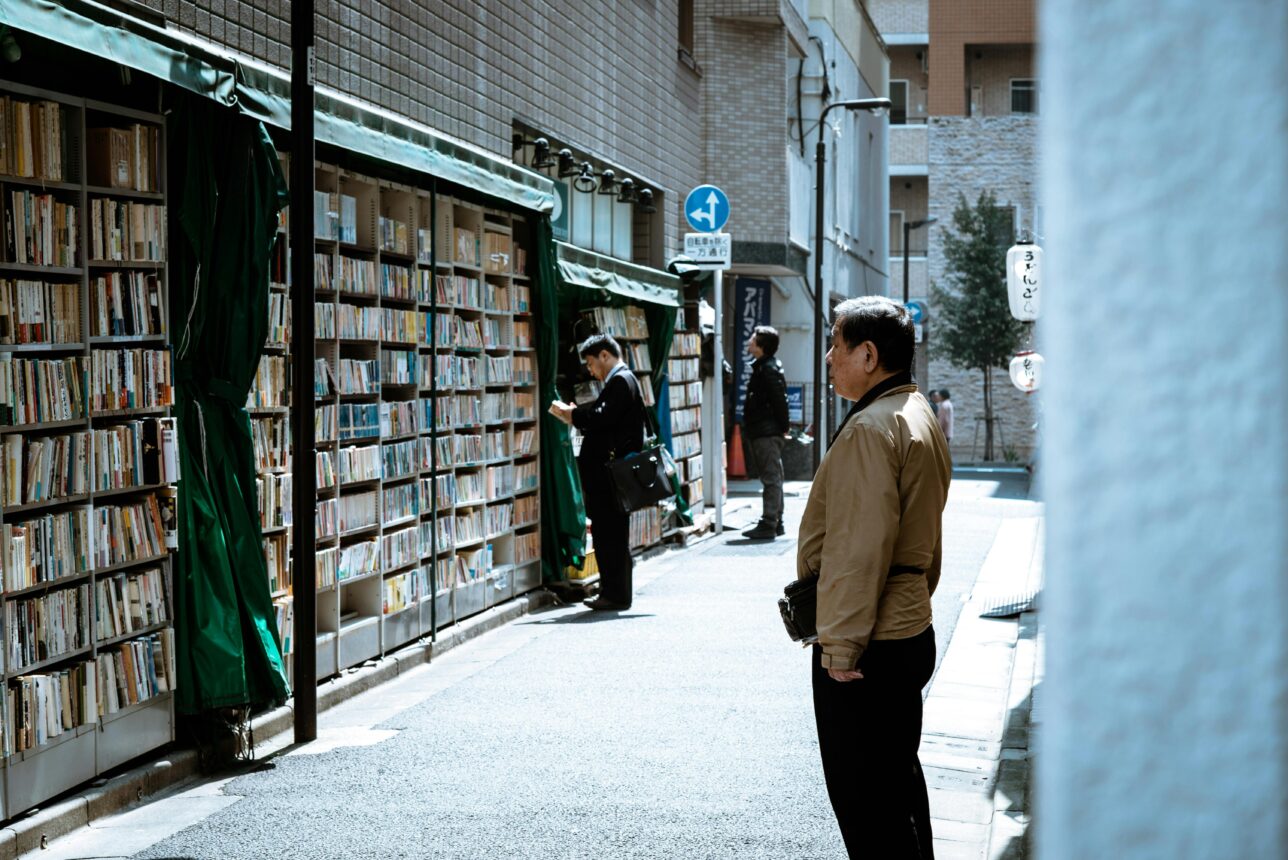
Jimbocho, Tokyo’s iconic vintage book district, was recently crowned one of the “World’s Coolest Neighborhoods of 2025” by Time Out—and it absolutely lives up to the title. With over 150 bookstores, publishing houses, and academic institutions packed into just a few blocks, Jimbocho offers an incredible amount to explore.
In recent years, the area has gained renewed attention, attracting international visitors and younger creatives drawn to its nostalgic charm and intellectual energy.
Jimbocho is conveniently located in central Tokyo and is easily accessible by multiple train lines. The closest station is Jimbocho Station, served by the Tokyo Metro Hanzomon Line, Toei Shinjuku Line, and Toei Mita Line.
From major hubs like Shibuya or Otemachi, the Hanzomon Line provides direct access, making it a particularly convenient option for visitors. Alternatively, you can walk to Jimbocho in about 10–15 minutes from Ochanomizu Station or Suidobashi Station, both of which are served by the JR Chuo and Sobu lines.
With its central location and excellent connectivity, Jimbocho is an easy addition to any Tokyo itinerary.
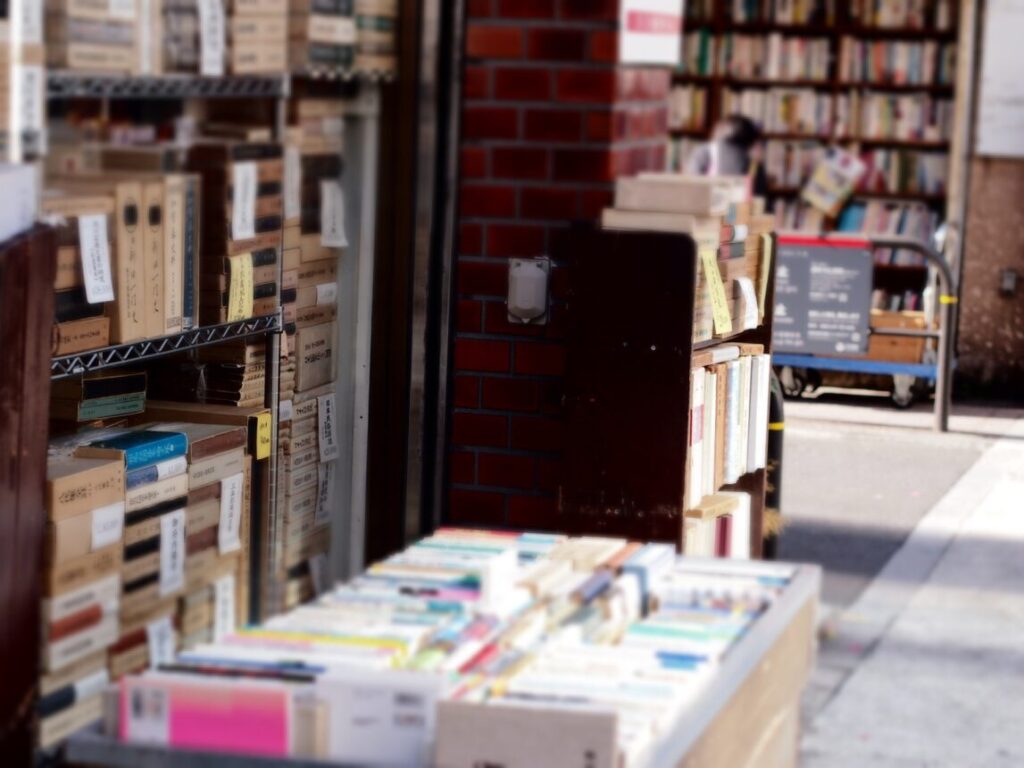
Jimbocho takes its name from a 17th-century samurai, Jimbo Nagaharu, who once lived in the area. After much of the neighborhood was destroyed by fire in 1913, a bookseller named Shigeo Iwanami opened a small shop that would later grow into Iwanami Shoten, one of Japan’s most influential publishing houses.
Today, Jimbocho is widely known as Tokyo’s premier book district, where locals and visitors alike come to immerse themselves in literature. Centered around the intersection of Yasukuni-dori and Hakusan-dori, the area offers an extraordinary range of genres—from rare first editions and antique volumes to contemporary works, foreign titles, and highly specialized academic texts.
If you’re a fan of Western literature, Kitazawa Books is the place to visit. While Jimbocho offers a wide variety of genres, many bookstores primarily focus on Japanese publications. Kitazawa Books stands out as a foreign used bookstore specializing in rare and secondhand English-language titles, making it a dream destination for bibliophiles with a love for Western literature.
For those drawn to more artistic and pop culture-focused collections, Komiya Shoten is well worth a stop. This vintage bookstore features an eclectic mix of photography books, contemporary art, and film memorabilia. Fans of franchises like Star Wars may even find themselves leaving with luggage a little heavier than expected.
Another must-visit is Komiyama Tokyo, a long-established bookstore with over 80 years of history. Spanning four floors, it offers an impressive selection of books covering modern Western and Japanese art, design, fashion, and history. It is particularly known for its extensive collection of vintage photo books, original photographic prints, and contemporary artworks.
While Jimbocho is best known for its bookstores, it’s also one of Tokyo’s most underrated food destinations—especially for comfort food lovers.
Often referred to as Tokyo’s “curry town,” the neighborhood is filled with long-established curry restaurants, each with its own loyal following. From rich, European-style curry at Bondy to spicier and more experimental variations, the area offers an impressive range of flavors within walking distance. Lunchtime lines are common, as students and office workers gather for their favorite dishes.
Beyond curry, Jimbocho also boasts a deep-rooted café culture. Traditional kissaten (Japanese coffee shops) are scattered throughout the area, serving hand-drip coffee, thick toast, and a quiet, nostalgic atmosphere that feels unchanged from decades past. These cafés provide the perfect place to relax after browsing the neighborhood’s many bookstores.
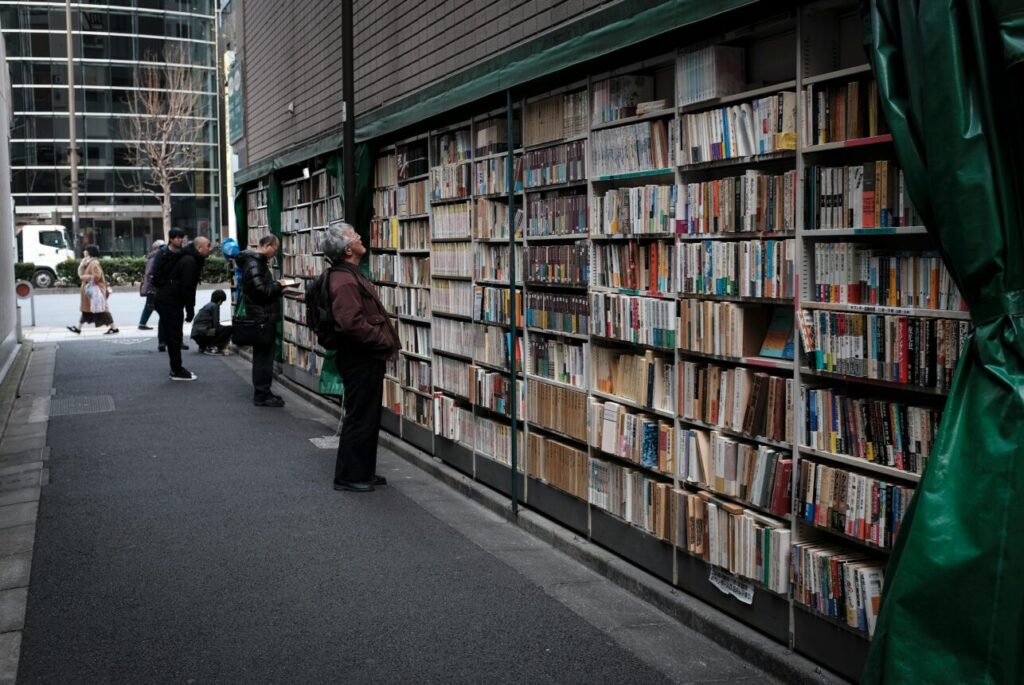
Jimbocho has a distinct atmosphere that’s hard to find anywhere else, shaped in large part by its deep academic roots. Its intellectual identity dates back to the late 19th century, particularly following the Meiji Restoration, when Japan began modernizing its education system.
As Western-style universities were established across Tokyo, the Jimbocho area naturally became a hub for students and scholars. Institutions such as Meiji University, along with nearby Nihon University and Senshu University, helped create a dense academic environment.
With students in need of affordable housing, study spaces, and access to books, bookstores, publishers, and cafés quickly began to cluster in the area. This ecosystem fostered a culture where learning extended beyond classrooms and into everyday life.
Today, that legacy remains alive. The streets of Jimbocho are filled with quiet cafés, students deep in study, and conversations that often drift into intellectual debate. It’s this blend of academia, literature, and community that gives Jimbocho its uniquely thoughtful and enduring charm.
①.jpg)