Experiencing Obon in Japan: Family, Spirits and Summer Traditions
Posted on August 13, 2026
If you are interested in Japanese culture and storytelling, you may already be familiar with some iconic scenes associated with summer in Japan: paper lanterns floating along a river at night, crowds dancing in a circle around a wooden platform, or families gathering while children play with light sparklers nearby.
Some of these familiar scenes are closely connected to Obon (お盆), one of Japan’s most important periods of remembrance. Much like Día de Muertos in Mexico or the Yu Lan Festival (also known as the Hungry Ghost Festival) celebrated in parts of Asia, Obon is a time when the living symbolically welcome the spirits of their ancestors back into the family home.
Yet behind the lanterns, dances, and summer gatherings lies a series of meaningful customs that can vary from one region and family to another.
Let us take a closer look at this enduring Japanese tradition and discover how families welcome, honor, and eventually bid farewell to their ancestors.
What Is Obon? The Meaning Behind the Tradition
Before diving into the customs surrounding this celebration, we should first ask what Obon actually is. Put simply, Obon is a summer tradition dedicated to honoring the memory and spirits of deceased family members. According to tradition, ancestral spirits temporarily return to the world of the living to visit their descendants. During this period, families welcome them home, pay their respects, and eventually guide them back at the end of their stay.
Although Obon also includes public celebrations, it remains primarily a spiritual and family-centered tradition. Its origins are linked to the Buddhist observance known as Urabon-e (盂蘭盆会).
The tradition is closely associated with the story of Mokuren, one of the Buddha’s chief disciples. After discovering that his deceased mother was suffering in the realm of hungry ghosts, he followed the Buddha’s advice and made food offerings to a community of monks. According to the story, these offerings freed her from her suffering.
Over time, this Buddhist observance became associated with local Japanese customs of honoring ancestral spirits, gradually developing into the Obon traditions still practiced today.
When and Where is Obon Celebrated? What to expect during the Japanese Summer
Obon was originally observed around the fifteenth day of the seventh month of the lunar calendar. However, after Japan adopted the Gregorian calendar in 1873, different regions adapted the date in different ways. This is why Obon is not celebrated at exactly the same time throughout the country.
Shichigatsu Bon (七月盆), or July Obon, is observed around July 13 to 16 in parts of Tokyo and several other areas. Hachigatsu Bon (八月盆), also called month-late Obon, is held around August 13 to 16 and is now the most widespread form of the celebration. Meanwhile, Kyūreki Bon (旧暦盆) continues to follow the traditional lunar calendar, particularly in Okinawa, meaning that its dates change from year to year.
If you visit Japan in mid-August, do not be surprised to notice a sudden change in the rhythm of daily life. Trains, airports, and highways become much busier as people travel back to their hometowns. At the same time, business districts and some city neighborhoods may feel noticeably quieter. Certain shops and companies may also close or operate on reduced schedules, so travel plans and appointments may require some extra preparation.
Regardless of the date, Obon is an important time for family reunions. Many people return to their hometowns and gather at the family home, while others visit and clean ancestral graves. At home, observances may take place around the family Buddhist altar, or butsudan (仏壇).
Although the details differ between regions, households, and Buddhist traditions, the celebration generally follows the same symbolic journey: welcoming the ancestors, honoring them during their stay, and guiding them back once Obon comes to an end.
How Is Obon Celebrated? From Welcoming Fires to Bon Odori
Although customs vary depending on the region, family, and religious tradition, many Obon celebrations follow a similar symbolic sequence: welcoming the spirits of the ancestors, honoring them during their temporary stay, and finally guiding them back to the spirit world.
Before Obon begins, some families clean their homes, the family altar, and the ancestral graves. They may arrange flowers and prepare incense, fruit, sweets, and other offerings to welcome the spirits into a clean and peaceful environment.
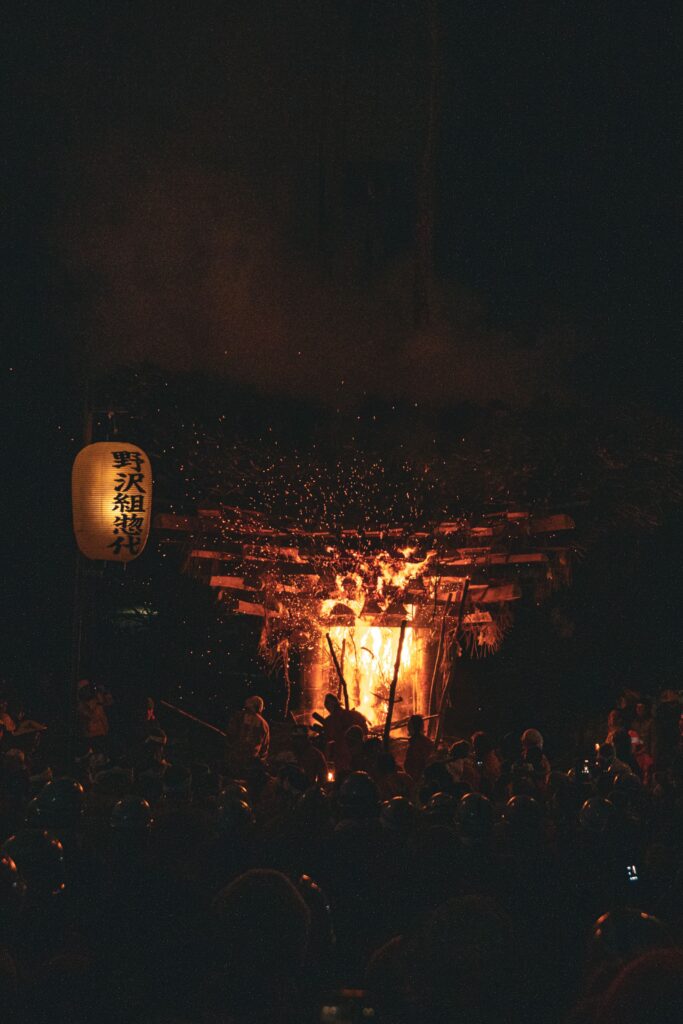
At the beginning of Obon, the spirits are traditionally guided toward the family home with the help of light. Some families light a mukaebi (迎え火), or welcoming fire, near the entrance to the house, while others set up lanterns. These lights act as symbolic landmarks, helping the spirits find their way back to their families.
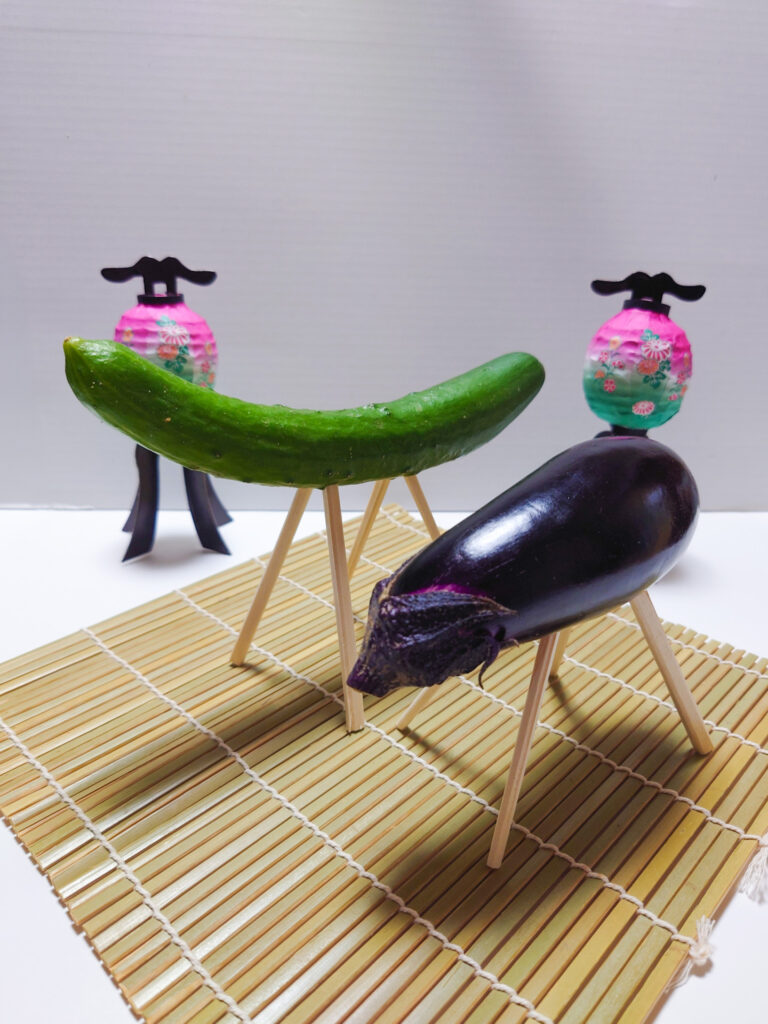
Among the most recognizable symbols of Obon are the shōryō-uma (精霊馬), small spirit mounts made from cucumbers and eggplants, with short wooden sticks inserted to form their legs. The cucumber represents a fast horse, allowing the spirits to reach their families quickly. The eggplant represents a slower cow or ox, allowing them to leave peacefully at the end of Obon. According to some interpretations, it also helps them carry the offerings received during their visit.
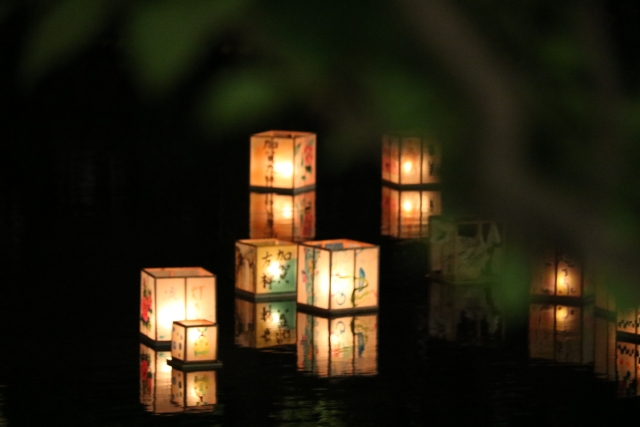
As Obon comes to an end, the spirits are guided back to their world. Some families light an okuribi (送り火), or send-off fire, to show them the way. In certain regions, tōrō nagashi (灯籠流し) ceremonies are also held, during which lanterns are set afloat on rivers or the sea.
Although many family rituals remain private, the atmosphere of Obon can still be felt throughout local neighborhoods. Visitors may notice lanterns near temples, hear festival music coming from a nearby park, or see families dressed in yukata on their way to a local Bon Odori.
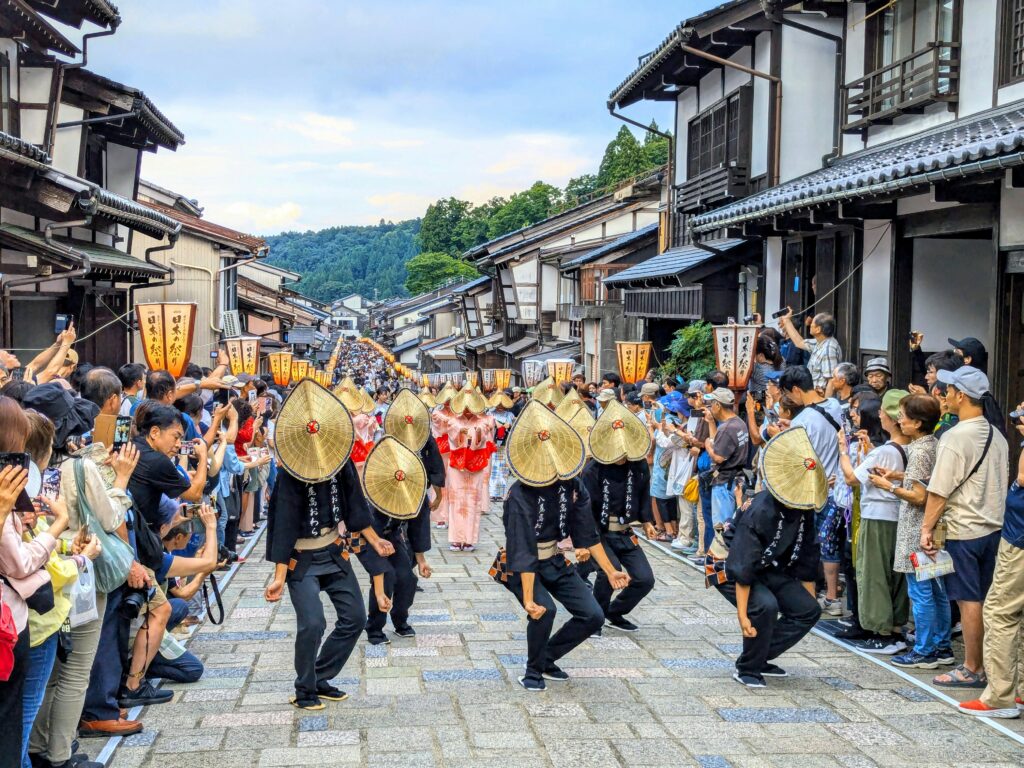
During Bon Odori (盆踊り), residents gather on temple grounds, in parks, and in neighborhood squares to dance around a raised platform called a yagura (櫓). The music and movements vary from one region to another, but the dances are often easy to follow. In many communities, visitors are welcome to watch and may also be invited to join the circle.
Experiencing Obon in Japan : About Life in Japan
Obon is more than a summer festival or tradition. It symbolizes remembrance, family, and community coming together, temporarily changing the pace and rhythm of everyday life across Japan.
For visitors and international residents, at first glance, the season might reveal itself through crowded trains, quieter city streets, then glowing lanterns or through the distant sound of Bon Odori music in a neighborhood park. Behind all of these aspects lies a tradition that continues to connect families across generations.
Whether you join a local dance or simply observe the changes around you, experiencing Obon offers a meaningful glimpse into the values that shape life in Japan. Living here means discovering not only a new place to call home, but also the seasonal traditions and community life that give each neighborhood its own character.
START YOUR JOURNEY TODAY
Ready to buy property in Japan? Let Mr. LAND guide you toward making your dream a reality. Browse our listings, book a consultation, or contact our friendly team for more information.
Don’t wait—take the first step toward owning your dream property in Japan today!
Ready to buy property in Japan? Let Mr. LAND guide you toward making your dream a reality. Browse our listings, book a consultation, or contact our friendly team for more information.
Don’t wait—take the first step toward owning your dream property in Japan today!